
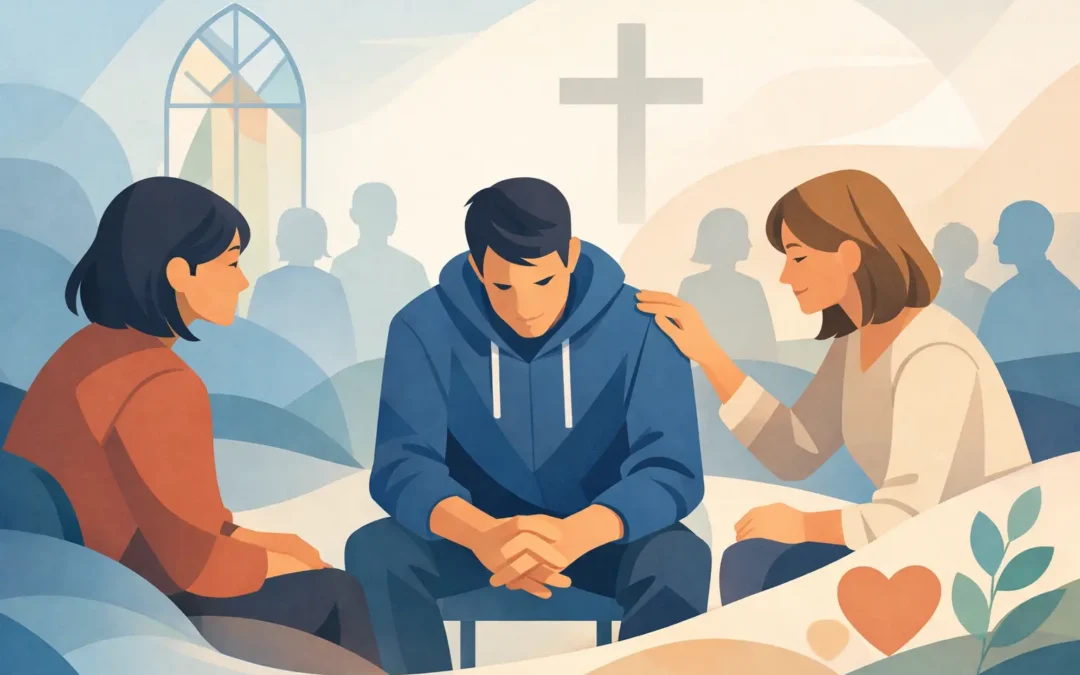
Some wounds do not show on the outside. You can sit in a pew, go to work, answer texts, and still carry anxiety, grief, shame, anger, betrayal, or patterns you cannot seem to break. That is why many people begin searching for a church group for emotional healing – not because they have everything figured out, but because they are tired of suffering alone.
That search matters. Emotional pain often grows in isolation. What starts as a private struggle can become a cycle of withdrawal, fear, people-pleasing, unhealthy coping, or relapse into old habits. A faith-based recovery group can meet that pain with something many people have been missing for a long time: truth, grace, and a room full of people who understand that brokenness is not the end of your story.
Why a church group for emotional healing can help
Healing is personal, but it is rarely meant to happen alone. Scripture calls people out of hiding and into the light, not to shame them, but to restore them. A healthy church group for emotional healing creates space for that restoration. It offers more than advice. It offers community, prayer, accountability, and the reminder that your identity is not defined by what happened to you or by how you have tried to cope with it.
For many adults, emotional pain is tied to more than one issue at a time. It may be grief mixed with addiction. Trauma mixed with relationship dysfunction. Depression mixed with deep spiritual exhaustion. That is why a church-based recovery setting can be so powerful. It does not reduce people to one label. It speaks to the whole person – heart, mind, relationships, and spiritual life.
This does not mean every church group is the same, and it does not mean spiritual support replaces every other kind of help. Sometimes people benefit from both group recovery and professional counseling. Sometimes the first step is simply having the courage to walk into a room and admit, “I need help.” Both can be true. The goal is not to pretend pain is simple. The goal is to stop carrying it alone.
What emotional healing in a church setting really looks like
Some people hear the phrase emotional healing and worry they will be met with shallow encouragement or pressure to hide their struggle behind religious language. A healthy ministry does the opposite. It makes room for honesty. It welcomes people who are weary, skeptical, ashamed, or unsure what they even believe right now.
Emotional healing in a church setting is not instant relief or forced positivity. It is often slow, steady work. It looks like naming what hurts. It looks like confessing unhealthy patterns without being crushed by condemnation. It looks like learning how God sees you when your own thoughts have become harsh and unforgiving.
It also looks like being known. Many people have spent years trying to appear fine. They have learned how to function while quietly unraveling. In a grace-filled recovery community, masks begin to fall. You realize other people have lived through panic, loss, addiction, resentment, family trauma, and self-destructive choices. That realization does not erase pain overnight, but it breaks the lie that you are the only one.
Signs of a healthy church group for emotional healing
Not every faith-based group offers the same kind of care. If you are looking for a place to heal, it helps to know what matters most.
A healthy group is centered on grace and truth together. It does not excuse destructive behavior, but it also does not weaponize shame. It tells the truth about sin, pain, consequences, and responsibility while holding out the mercy of Christ for every person in the room.
It is also safe. Safe does not mean easy. It means people are treated with dignity. It means honesty is welcomed, not punished. It means confidentiality, humility, and compassion are taken seriously. A good recovery ministry should feel like a place where you can breathe, not a place where you need to perform.
A strong group is relational, not just instructional. Information matters, but transformation usually happens through consistent community. When people pray for one another, listen without fixing everything, and keep showing up week after week, trust begins to grow. That trust creates space for healing that goes deeper than behavior management.
Finally, a healthy ministry points people to Jesus, not to self-reliance. Emotional healing is not found by trying harder to hold yourself together. It is found by bringing your pain into the presence of God and walking with others who are doing the same.
What to expect when you show up
Many people delay getting help because they are afraid of the unknown. They wonder who will be there, whether they will be pressured to speak, or whether their struggles will be too messy for a church environment.
The truth is, many people who attend recovery gatherings feel nervous the first time. They do not know the language. They are unsure if they belong. Some have church wounds. Others have never attended anything faith-based before. That is exactly why a welcoming group matters.
In a healthy Christian recovery setting, you should expect warmth, not interrogation. You should expect clear structure, but not pressure to pretend. You may hear teaching grounded in Scripture, testimonies of change, and honest conversation about hurts, hang-ups, and habits. You may find people at very different places in their journey. Some are taking early steps. Others have walked through years of healing and now serve others from a place of humility.
You do not need to have polished words. You do not need to prove how serious your pain is. You do not need to clean up your life before you arrive. Healing often begins when people come as they are and let God meet them there.
Why community matters when pain runs deep
Emotional pain tends to isolate. Shame says, “Stay hidden.” Fear says, “No one will understand.” Pride says, “Handle it yourself.” But those voices often keep people trapped.
Community interrupts that pattern. It reminds you that healing happens in community because God often uses other people to carry hope to places where yours has gone quiet. A shared room, a prayed-over burden, a testimony from someone further down the road – these moments can reawaken courage.
There is also something powerful about being surrounded by people who understand recovery as more than behavior control. Lasting change requires heart change. If the roots of pain are never addressed, people often keep returning to the same coping patterns. A Christ-centered group helps connect emotional wounds with the deeper need for surrender, identity, forgiveness, and spiritual renewal.
This is where faith and recovery meet in a meaningful way. Not as a slogan, but as a lived reality. God is bigger than your problems, and that truth becomes easier to believe when you are walking with people who have seen Him carry them through their own darkest places.
A place to begin, even if you feel uncertain
If you have been searching for a church group for emotional healing, you may not need a perfect plan. You may just need a first step. The first step could be showing up while still unsure. It could be admitting that your usual ways of coping are not working. It could be letting yourself believe that grace is still available to you.
At New Paths Recovery, that first step does not require having it all together. It is a place for people facing addiction, emotional pain, destructive habits, and life struggles to come into a non-judgmental, Gospel-centered community and begin again. There is strength in a room where people are honest, where Christ is central, and where no one is written off.
Some stories change quickly. Others unfold slowly. Most involve setbacks, courage, prayer, and the steady work of learning to live differently. But healing is still possible. Freedom is still possible. And if your heart is tired from carrying too much for too long, it may be time to let community help carry the weight while God begins to do what only He can do.
You do not have to be fearless to take that step. You just have to be willing to come as you are.