
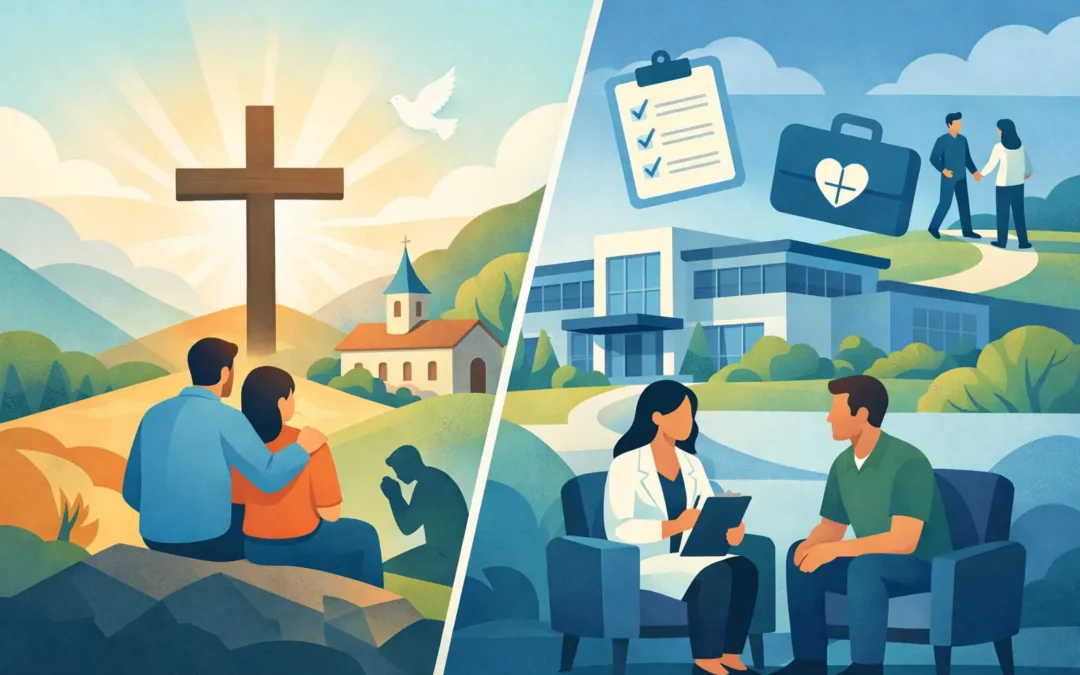
When someone is tired of hiding, tired of relapsing, or simply tired of carrying pain alone, the question of christian recovery vs rehab becomes deeply personal. This is not just about programs. It is about where real healing begins, what kind of help is needed, and whether recovery will address only behavior or the heart underneath it.
For many people, the choice feels confusing because both paths promise change. Both can involve support, structure, honesty, and accountability. But they are not the same thing, and knowing the difference can help you take the next right step without shame.
Christian recovery vs rehab: the basic difference
Rehab usually refers to a clinical treatment setting designed to help people stop using substances or address serious addiction patterns. Depending on the program, rehab may include detox support, medical supervision, counseling, group therapy, and discharge planning. It is often time-based and treatment-driven.
Christian recovery is different in both setting and focus. It may happen in a church, a ministry, a small group, or a faith-based recovery community. While some Christian programs also offer formal treatment, many are centered on spiritual healing, confession, discipleship, community, and identity in Christ. The goal is not only sobriety or behavior change. It is transformation from the inside out.
That distinction matters. A person can complete rehab and still feel empty, isolated, angry, or spiritually numb. A person can also attend a Christian recovery group and still need medical or clinical care. The real issue is not which option sounds better. It is which kind of help fits the depth of the struggle right now.
Rehab can be necessary and life-saving
There are times when rehab is not optional. If someone is physically dependent on alcohol, opioids, or other substances, withdrawal can be dangerous. If there is a risk of overdose, self-harm, severe mental health symptoms, or repeated failed attempts to stop alone, a structured treatment environment may be the safest place to begin.
That does not mean faith has no place there. It means wisdom matters. God often works through practical care, trained professionals, and safe intervention. Seeking rehab is not a lack of faith. For some people, it is the first honest act of surrender.
Rehab can provide stabilization that a church group is not designed to offer. Medical monitoring, licensed therapy, medication support, and intensive treatment can address urgent needs. If someone is in crisis, that level of care can protect life and create enough clarity for deeper healing to begin.
What Christian recovery offers that rehab often does not
Once the immediate crisis has passed, many people discover that staying free is harder than getting sober. That is where Christian recovery speaks to the deeper wounds. It asks questions rehab may touch only lightly. What pain keeps driving this pattern? What lies have you believed about yourself? Where has shame taken root? Who are you when the numbing stops?
Christian recovery starts with the truth that you are not beyond grace. Your addiction, your anger, your secret habit, your failed relationships, or your emotional pain do not get the final word. Jesus does. That changes the tone of recovery. Instead of chasing self-improvement alone, you begin learning how to live from a new identity.
This does not make recovery less practical. It makes it more complete. Confession breaks isolation. Scripture reframes identity. Prayer invites surrender. Honest community replaces secrecy. Service gives purpose. Step by step, people begin to heal not only from what they did, but from what happened to them and what they came to believe because of it.
Christian recovery vs rehab is not always either-or
This is where many people get stuck. They assume they must choose one side. In reality, christian recovery vs rehab is often a both-and conversation.
A person may need rehab first and Christian recovery afterward. Another person may already be sober but still trapped in bitterness, anxiety, lust, codependency, or unresolved grief, and what they need most is a Christ-centered recovery community. Someone else may be in counseling and also need a church-based space where healing happens in community.
There is no weakness in needing more than one kind of support. Recovery is not a contest. It is a path of truth, surrender, and wise help.
How to know what kind of help you need
A simple way to think about it is this. If your body is in danger, your use is severe, or stopping on your own brings serious withdrawal or mental health symptoms, start with clinical care. If you are medically stable but spiritually exhausted, emotionally wounded, isolated, or stuck in destructive patterns that keep returning, Christian recovery may be the place where deeper roots are finally addressed.
Some people do not have a substance addiction at all, yet they still need recovery. They are battling shame, compulsive behavior, sexual sin, rage, trauma, people-pleasing, or family pain that has never been named. Rehab is not built for every kind of struggle. Christian recovery makes room for the broader story of brokenness and redemption.
That wider lens can be a relief. It reminds people that they do not have to hit a dramatic rock bottom to ask for help. If something is ruling your life, harming your relationships, or keeping you from peace with God, it is worth bringing into the light.
The role of community in lasting freedom
One reason many people relapse after treatment is not because they did not learn enough. It is because they returned to isolation. Healing rarely holds when a person goes back to secrecy, disconnection, and old survival patterns without real support.
Christian recovery is powerful because it brings people into a safe, honest, grace-filled community. You sit with others who understand struggle. You tell the truth without pretending. You begin to see that brokenness is not disqualifying. In fact, it is often the place where God starts rebuilding a life.
That kind of community is hard to measure on paper, but it matters. People need more than information. They need belonging. They need reminders of truth when shame gets loud. They need others who will walk with them, pray with them, and call them back when they want to disappear.
Faith-based recovery is not denial of real pain
Some people hear “Christian recovery” and worry it means shallow answers or spiritual clichés. That concern is understandable, especially for those who have been wounded by religious performance. Real Christian recovery is not pretending everything is fine. It is not slapping a Bible verse on deep pain and calling it healed.
Healthy faith-based recovery tells the truth about sin, suffering, trauma, and human weakness. It makes room for grief. It welcomes honesty. It understands that prayer and repentance are not opposed to wise support. They work together. Grace does not minimize the struggle. It gives you the courage to face it.
That is why a Gospel-centered recovery ministry can be so meaningful. It does not ask people to clean themselves up before they come. It invites them to come as they are, with all the mess, and begin walking toward freedom with others.
What matters most is the next honest step
If you are weighing christian recovery vs rehab, you do not need to solve your whole future today. You need the next honest step. That might mean calling a treatment center. It might mean admitting to someone that you are not okay. It might mean walking into a recovery gathering at a church and letting yourself be known.
At New Paths Recovery, that door is open for people carrying addiction, emotional pain, destructive habits, and the quiet struggles nobody else sees. No sign-up. No need to perform. Just a place to start telling the truth and find freedom in Christ alongside others.
God is bigger than your problems, and your story is not finished. Whether you need clinical treatment, Christ-centered community, or both, healing begins when you stop hiding and step into the light.