
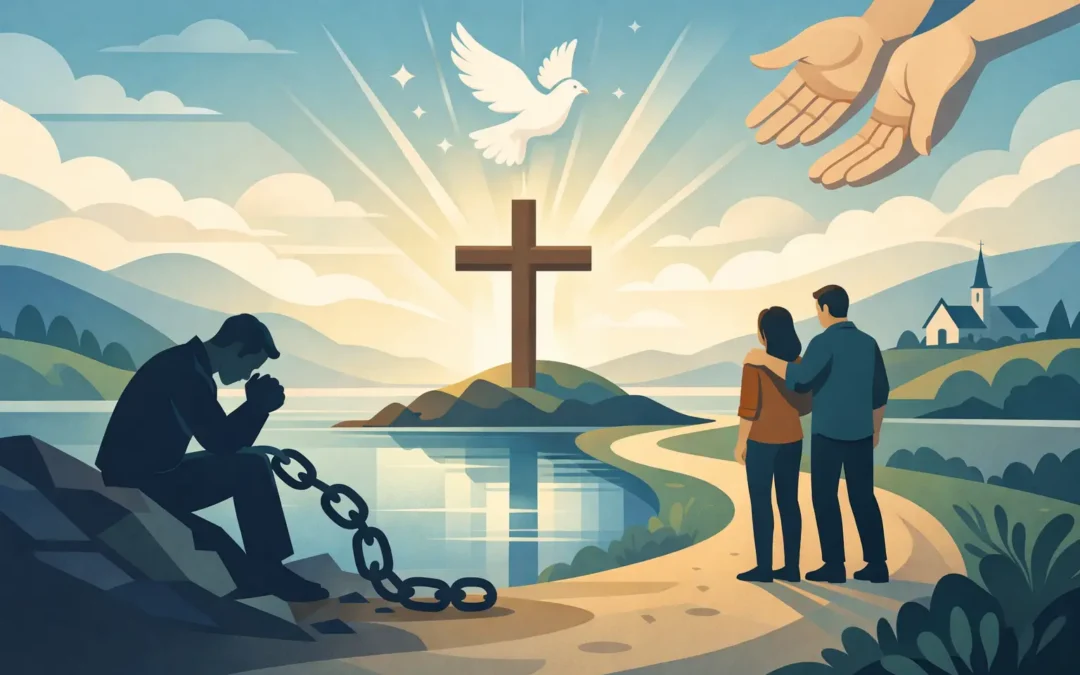
A lot of people ask this question when they are worn out from trying harder and still ending up in the same place. How does christian recovery work when the struggle feels deeper than bad choices, and the pain behind it has been building for years? The short answer is that Christian recovery goes beyond behavior management. It addresses the heart, the wounds, the lies we believe, and the hope that is found in Jesus.
For many people, addiction or destructive habits are not only about substances or compulsions. They are tied to grief, shame, anger, loneliness, fear, trauma, or unresolved pain. That is why white-knuckling your way through change often does not last. Christian recovery starts with the belief that God is bigger than your problems and that your story is not over. Real healing is possible, but it usually happens through surrender, truth, community, and daily dependence on Christ.
How does christian recovery work at the heart level?
Christian recovery works by dealing with more than the outward symptom. If someone stops drinking, using, hiding, controlling, exploding in anger, or repeating destructive patterns, that matters. But if the deeper issues stay untouched, the struggle often resurfaces in another form. A person may stop one habit and replace it with another, or still live under the same shame and fear that helped fuel the cycle in the first place.
A Christ-centered recovery process asks deeper questions. What pain are you medicating? What false identity have you accepted? What burdens have you carried alone? What sin needs confession, and what wounds need healing? Those are not easy questions, but they are often the beginning of real freedom.
Scripturally, the goal is not simply to become more self-controlled by sheer effort. The goal is transformation. That includes repentance where needed, but it also includes receiving grace. Many people know how to condemn themselves. Fewer know how to come into the light and let God rebuild what has been damaged.
It begins with honesty, not performance
One reason Christian recovery helps people is that it creates space to stop pretending. Shame tells people to hide, clean themselves up first, and only then come to God or to others. The Gospel says the opposite. You come as you are, and God meets you there.
That does not mean recovery is passive. It means honesty comes before progress. You tell the truth about what is happening. You admit what you cannot fix on your own. You stop managing appearances and begin walking in the light. For some people, that is the hardest step because image has been protecting them for a long time.
In a healthy Christian recovery setting, honesty is not met with shock or rejection. It is met with grace and truth. Both matter. Grace without truth can leave people stuck. Truth without grace can crush a person who is already barely hanging on. Healing usually starts when both are present.
How does christian recovery work in community?
Christian recovery is deeply relational because healing happens in community. Isolation is where many struggles grow stronger. Secrets get heavier in the dark. Despair gets louder when no one knows what is really going on. Recovery turns that pattern around by bringing people into a safe, non-judgmental environment where they can be known.
That community piece is not just emotional support, though it includes that. It also brings accountability, prayer, encouragement, and perspective. When someone else has walked through addiction, relapse, grief, betrayal, or years of destructive patterns and can say, “You are not beyond hope,” that carries weight.
This is one reason faith-based 12-step recovery can be so powerful. It gives people a rhythm of confession, surrender, support, and growth. It reminds them that they are not fighting alone and that freedom is not reserved for the people who look put together. Brokenness is not disqualifying. In many ways, admitting brokenness is where recovery really begins.
Christian recovery is not just about stopping something
A common misunderstanding is that recovery is mainly about quitting a substance or ending a habit. That is part of it, but Christian recovery aims at something fuller. It is about becoming whole in Christ.
That changes the focus. Instead of asking only, “How do I stop this behavior?” a person also asks, “Who am I in Jesus?” Identity matters because many destructive cycles are tied to what people believe about themselves. If someone sees themselves as hopeless, dirty, unwanted, or permanently damaged, they often live from that place. But when they begin to understand that they are loved by God, invited into grace, and not defined by their worst moments, change becomes more than behavior correction. It becomes renewal.
This is where discipleship and recovery naturally belong together. Recovery helps people face what is broken. Discipleship helps them learn how to walk with Christ in a new way of life. One addresses the struggle honestly. The other helps rebuild identity, purpose, and spiritual maturity over time.
The role of the 12 steps in a Christian setting
In a Christian recovery ministry, the 12 steps are often understood through a biblical lens. They are not a replacement for Scripture. They are a practical framework that helps people apply humility, confession, surrender, repentance, amends, and ongoing dependence on God.
That matters because change rarely happens in one emotional moment. A person may have a powerful breakthrough, but long-term healing usually requires a process. The steps give structure to that process. They help people slow down enough to see patterns, name pain, own responsibility, and practice obedience one step at a time.
There are trade-offs here, and honesty about that is helpful. Christian recovery is not the same as clinical treatment, and some people may need both. If a person is dealing with severe withdrawal, acute mental health concerns, or trauma that requires specialized care, professional support can be essential. A faith-based recovery ministry does not have to compete with that. In many cases, it works best alongside other needed support while still addressing the spiritual and relational roots that a clinical model may not fully reach.
Why grace matters so much in recovery
People trapped in destructive cycles usually already know they are failing. They do not always need more condemnation. They need truth, yes, but they also need hope strong enough to bring them back after they fall.
Grace does not excuse sin or minimize consequences. Grace tells the truth and still says, “Come back.” It breaks the lie that one relapse, one secret, one season of weakness means the door is closed. In Christian recovery, grace keeps people from giving up when the process is slower than they hoped.
That is important because recovery is rarely a straight line. Some people experience immediate freedom in one area and slow healing in another. Some need time to rebuild trust with family. Some need to learn emotional honesty for the first time. Some discover that the habit was only the surface issue, and the real work is grief, forgiveness, or identity. Progress can look different from person to person.
What people can expect from a Christian recovery group
A healthy Christian recovery group is not a place where perfect people lecture struggling people. It is a place where people come honestly, seek God together, and support one another toward freedom. The atmosphere should feel safe, welcoming, and grounded in truth.
That means people can expect prayer, biblical encouragement, and practical support. They can expect to hear that Jesus changes lives and that no one has to keep carrying shame alone. They can also expect recovery to involve participation. Growth usually requires showing up, listening, speaking honestly, receiving counsel, and staying connected even when it feels easier to disappear.
At New Paths Recovery, that kind of environment matters deeply. The goal is not to impress people. The goal is to help them find freedom through Christ in a place where they are seen, loved, and invited into lasting change.
If you have been wondering whether Christian recovery could help you, the most honest answer is this: it works as people bring their real pain into the light and keep walking with Jesus in community. Not perfectly. Not instantly. But truly. And if you are tired of carrying your struggle alone, showing up may be the first step toward healing you thought was no longer possible.